In short
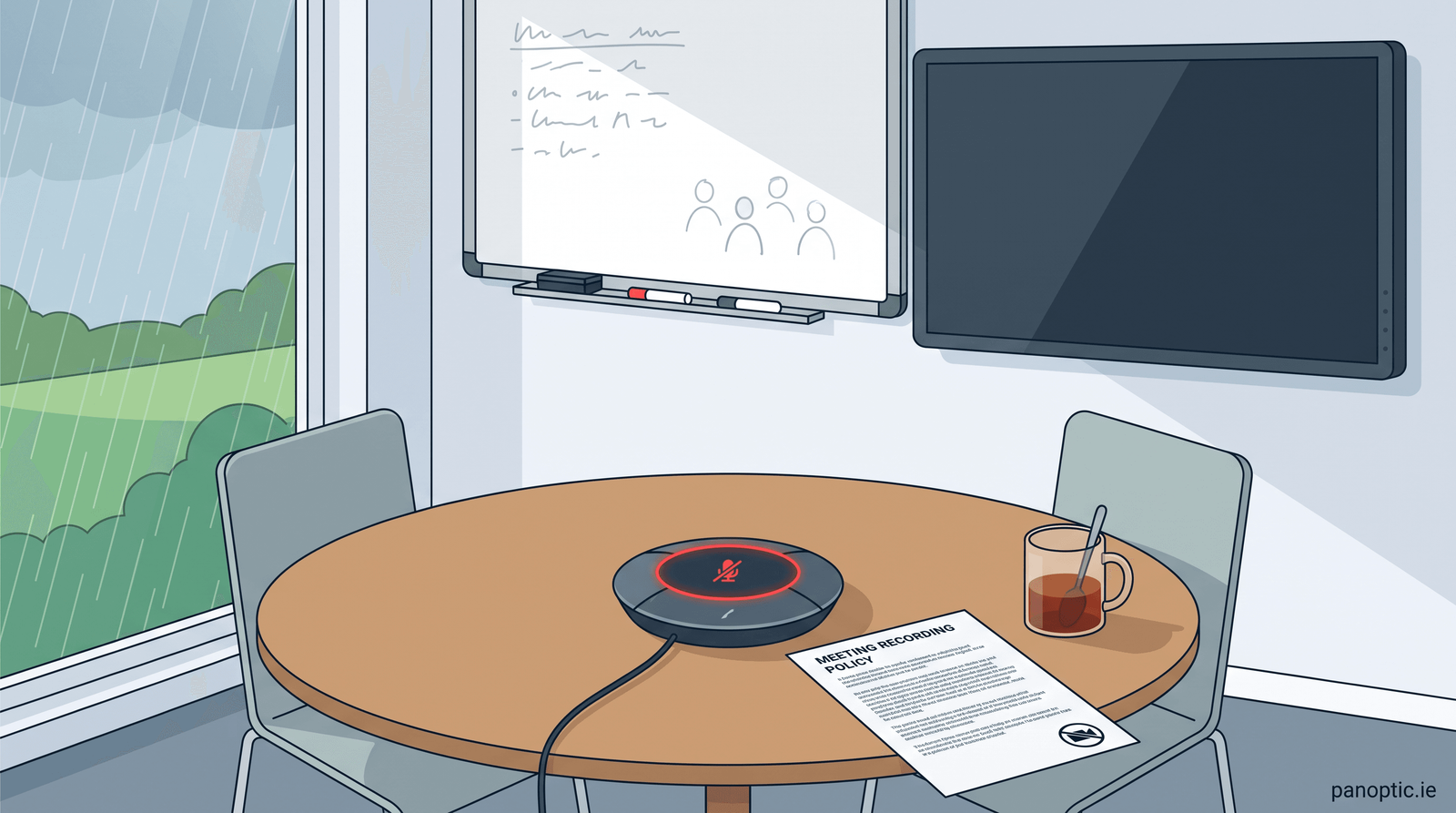
A meeting recording doesn't stop when your client leaves. In Microsoft Teams and Google Meet it runs until someone stops it or the last person leaves. Third-party notetakers such as Fireflies email a recap to everyone on the invite by default. Anything said after the client drops off can reach them. The safest habit is to end the meeting and start a new one for any private follow-up.
AI notetakers and meeting transcription have gone from novelty to default in a couple of years. Most people know the recording indicator means they're on the record. Fewer know that it stays on after the client leaves, and that the transcript of the rest of the conversation can land in that client's inbox.
What happens to the recording when people leave the call
In Microsoft Teams, a recording carries on even if the person who started it leaves. Microsoft's documentation says the recording stops automatically once everyone leaves the meeting. If someone forgets to leave, it ends and restarts every four hours until the last participant goes. Live transcription also stops only when all participants have left.
Google Meet behaves the same way. The recording stops when everyone leaves, or after eight hours.
On Zoom, answers on Zoom's community forum say a cloud recording continues if the host hands over to a co-host and leaves. Treat that as the working assumption.
Third-party notetakers such as Otter and Fireflies join the call as a participant. Whether they leave when their owner leaves depends on the product and its settings. If a notetaker bot is still in the participant list, assume it is still listening.
In every case, the recording is tied to the meeting. Your client clicking Leave changes nothing about it.
Who gets the transcript and summary afterwards
This varies by tool, and the defaults are where the risk sits.
Fireflies and similar notetakers
Fireflies' own guide says the recap email goes to everyone on the invite by default, internal and external. Its default privacy setting also lets anyone with the link view the meeting. A client who left after twenty minutes still gets a summary of the whole call, including the part after they left.
Microsoft Teams
Teams is more cautious with people outside your organisation. Microsoft says people from another organisation can't view the transcript after the meeting, and guests see the recording only if it's explicitly shared with them. Everyone from your own organisation who attended can open both.
There is one exception to watch. With intelligent recap, an organiser or presenter can share the AI summary to email, and Teams fills the recipient list with everyone invited, external guests included. Microsoft's documentation says intelligent recap needs Teams Premium or a Microsoft Copilot licence.
Google Meet
Recordings save to the organiser's Google Drive. If the recording starts at the scheduled meeting time, attendees in the same organisation get access automatically. The recording link is emailed to the organiser and the person who started the recording.
So the client isn't the only audience. A colleague who joined for ten minutes, or a junior who sat in to learn, may get the full version too.
What can go wrong: three realistic scenarios
- The candid debrief. The client leaves and your team talks frankly about how the call went: who was difficult, what they didn't follow, whether the account is worth the effort. Every word ends up in a summary the client can read.
- Pricing and negotiating position. You discuss your margin, how far you can move on price, or what you'll concede if pushed. That's your negotiating hand, written out and emailed to the other side.
- Another client's details. Someone mentions a different client's case, account or patient by name. Now one client's personal data has gone to another. For a dental practice, an accountancy firm or a financial adviser, that could be a personal data breach under Article 4(12) of GDPR, and Article 33 may require you to notify the Data Protection Commission within 72 hours.
None of these needs anyone to be careless for more than a moment. The damage ranges from embarrassment and a strained relationship to a weaker negotiating position or a regulatory problem.
Two fixes, and the one we recommend
Stop the recording before you carry on
In Teams, go to More actions, then Record and transcribe, then Stop recording. Stopping the recording also stops transcription. In Google Meet, go to Meeting tools, then Recording, then Stop recording. If a third-party bot is in the call, remove it.
This works, but only if someone remembers. Every time, at the exact moment they're thinking about the conversation they're about to have.
End the meeting and start a new one
This is the option we recommend. When the client leaves, the organiser ends the meeting for everyone. In Teams, that's End meeting from the dropdown beside Leave. Then start a fresh, unrecorded call for the internal follow-up.
It's safer because nobody has to remember anything about the recording. The new call starts with a new participant list and no recording running. If anyone on your team uses a notetaker that joins meetings from their calendar, check how it treats an unscheduled call before you rely on this. Make it a team habit: client's gone, new link.
Settings worth checking across your business
Habits slip, so back them up with settings. Check these yourself or ask your IT provider:
- Who can record and transcribe. Teams admins control this through meeting policies. Microsoft says organisers with Teams Premium or a Microsoft Copilot licence can also limit it per meeting to organisers and co-organisers.
- Whether recording starts automatically. Auto-start is convenient, and it's how people forget they're being recorded.
- Who receives recaps. In Fireflies, change the recap email from everyone on the invite to only you or your own team, and move meeting privacy away from anyone with the link. Admins can set team-wide defaults.
- Which notetaker bots are allowed in. Decide which AI notetakers your business approves. We also recommend keeping the Teams lobby on for people outside your organisation, so someone has to let each outside attendee in, and can turn away a bot nobody recognises.
- How long recordings are kept. Teams recordings can be set to expire. Shorter retention means less sitting in OneDrive waiting to be found.
Write the agreed position into your acceptable-use policy, so new staff learn it on their first day.
What to do next
Pick one recurring meeting this week and check two things: does anything record automatically, and who gets the output? If the answer surprises you, that's the place to start.
If you'd like a hand, our managed IT service covers Teams and Microsoft 365 meeting policies across your organisation. The Technology Success Program is where we work through an AI notetaker policy with you as part of your roadmap. If you're in a regulated trade, see how we work with accountants and solicitors and dental practices.
Does a Teams recording stop when the organiser leaves the meeting?
No. Microsoft's documentation says a Teams recording continues even if the person who started it leaves, and the organiser doesn't need to be present. It stops automatically only when everyone has left. If someone stays connected, the recording ends and restarts every four hours until the last participant leaves. To stop it for everyone, stop the recording manually or use End meeting rather than Leave.
Who receives the transcript from an AI meeting notetaker?
It depends on the tool and its settings. Fireflies, for example, emails a recap to everyone on the calendar invite by default, including people outside your organisation, and lets anyone with the link view the meeting. Teams keeps transcripts within your organisation by default, though organisers can email AI summaries to all invitees. Check each tool's recap and privacy settings before you rely on it.
Can I delete a meeting transcript after it's been shared?
Partly. In Teams, the organiser and co-organisers can delete the transcript, or delete the whole recap including the recording. That removes it from Teams. It won't recall a summary a notetaker has already emailed to attendees, and it won't remove copies anyone has downloaded. If the content included someone's personal data, treat it as a possible data breach and get advice promptly.
Is recording a client meeting without telling them a GDPR issue?
It can be. A recording of an identifiable person is personal data, so you need a lawful basis under Article 6 of GDPR and must tell people it is happening under Article 13. Teams and Google Meet notify participants when recording starts, but third-party bots vary. Say at the start that the call is recorded, and why. For specific situations, check the Data Protection Commission's guidance.
How do I stop AI notetaker bots joining my meetings?
Start with policy: decide which notetakers your business approves. We recommend keeping the Teams lobby on for people outside your organisation, so someone has to let each outside attendee in and can turn away an unknown bot. For notetakers your own staff use, change their auto-join settings so they join only the meetings the user chooses. Your IT provider can review meeting policies across your tenant.